Wheelchair Navigation Today
A personal perspective by Lucy Webster, journalist and accessibility advocate.
The Burden of Planning
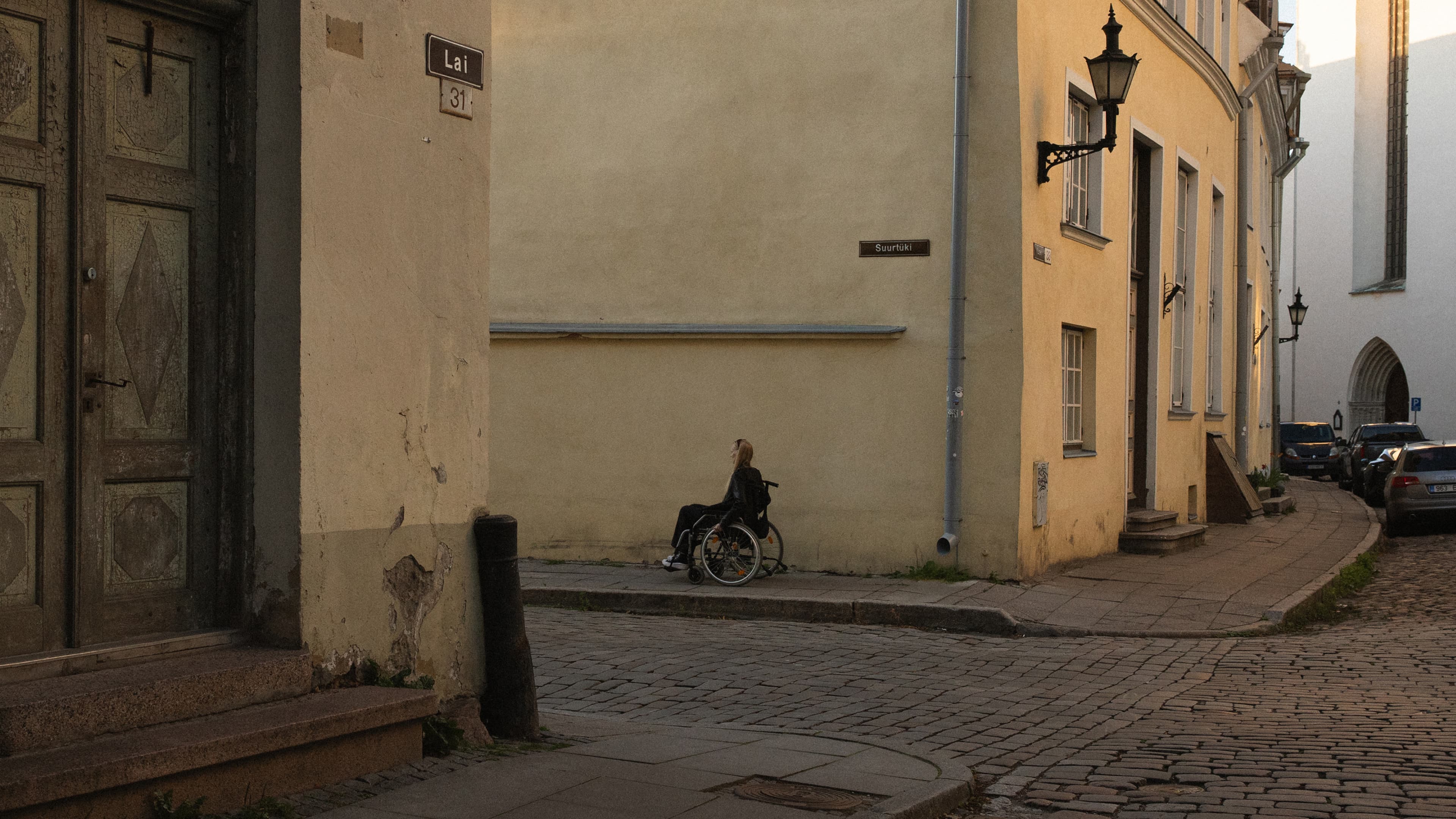
For most people, following a map on their phone as they stroll through a city is an easy task. With GPS, you don’t even need to be able to map read; you just pop in your destination and go. With up-to-the-minute directions, you don’t really need to pay attention, leaving your mind free to catch up on an audiobook on your way to a meeting or to take in the sights and sounds on your latest city break.
83% of disabled people say planning trips around accessibility adds stress or anxiety.
Euan's Guide, 2025
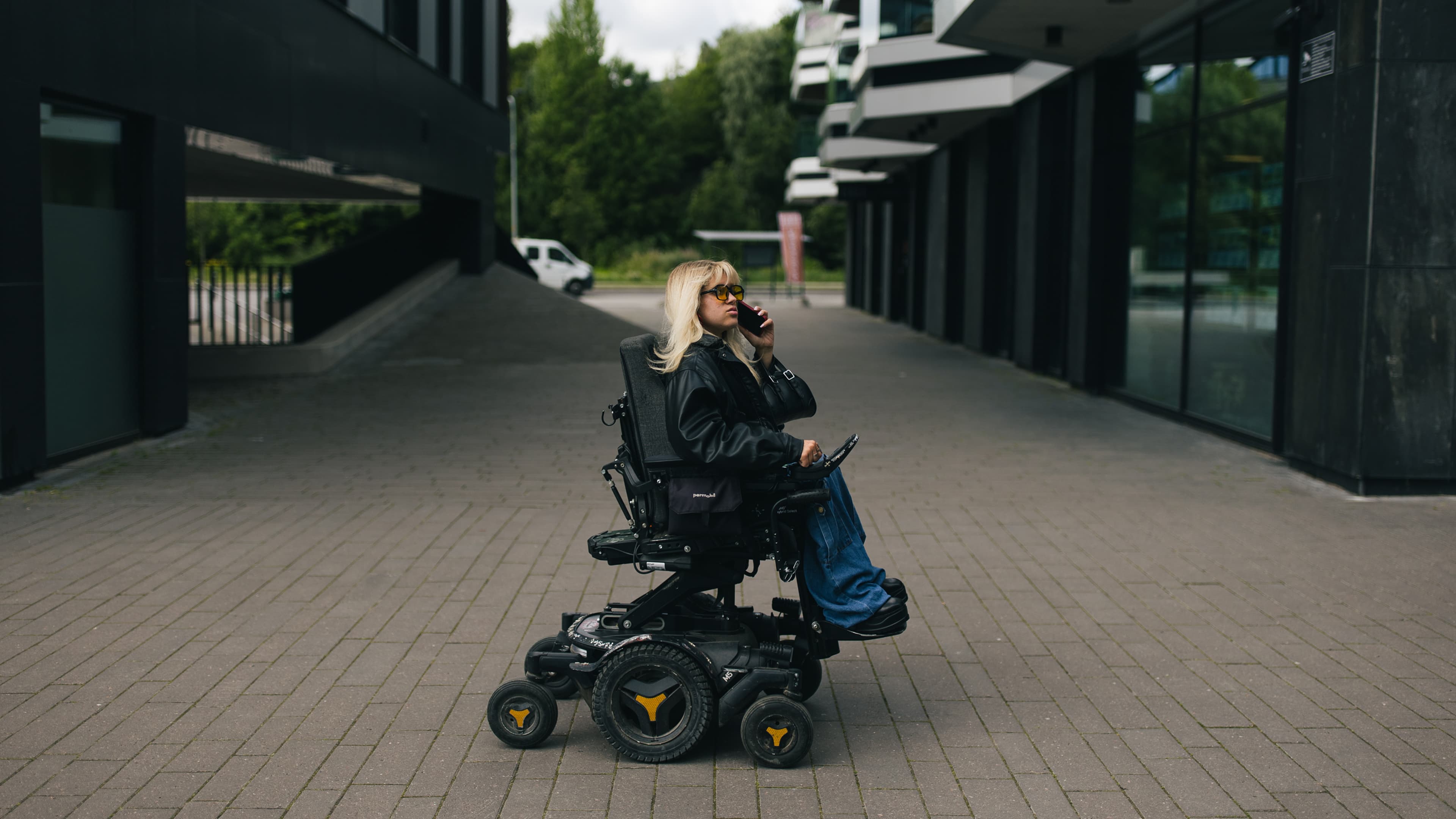
For the world’s 80 million wheelchair users, though, things are not so simple. Every journey has to be meticulously planned. Whether we have to check the often nonexistent accessibility of public transport, or assess if we can even get into the place we are heading to, there’s always additional work we have to do even before we head out the door.
A Lack of Information
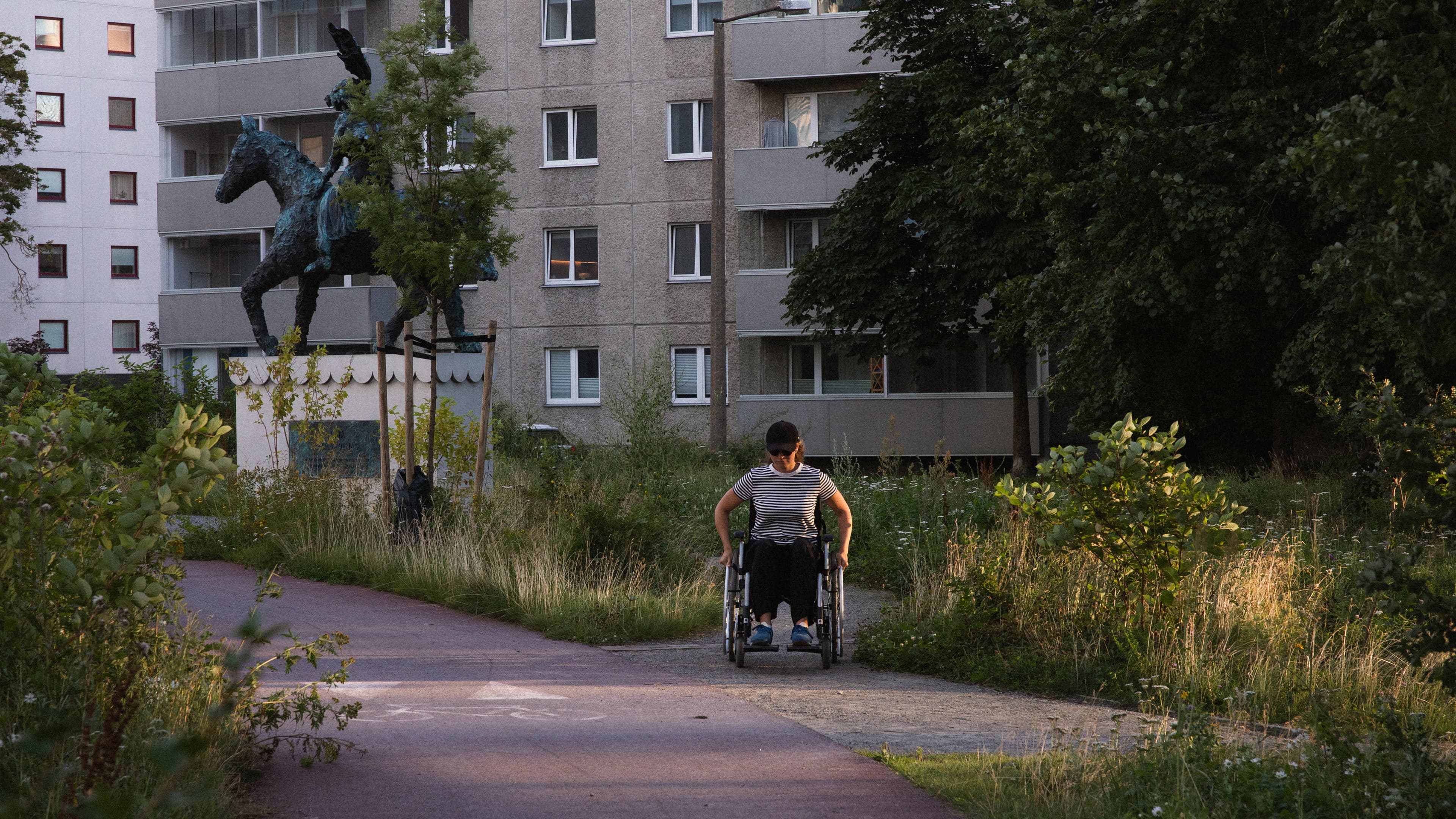
Another issue is the lack of information on whether the streets themselves are accessible. Even as a lifelong wheelchair user, this still metaphorically trips me up, especially if I’m in a city I don’t know well. Like many disabled people, I have a detailed mental map of the dropped kerbs in my local area, but this doesn’t help me when I’m on holiday. While many leading mapping apps, like Google Maps and Citymapper, do provide accessible options, the information they give is either not always accurate or simply not detailed enough to allow wheelchair users to travel with ease and confidence.
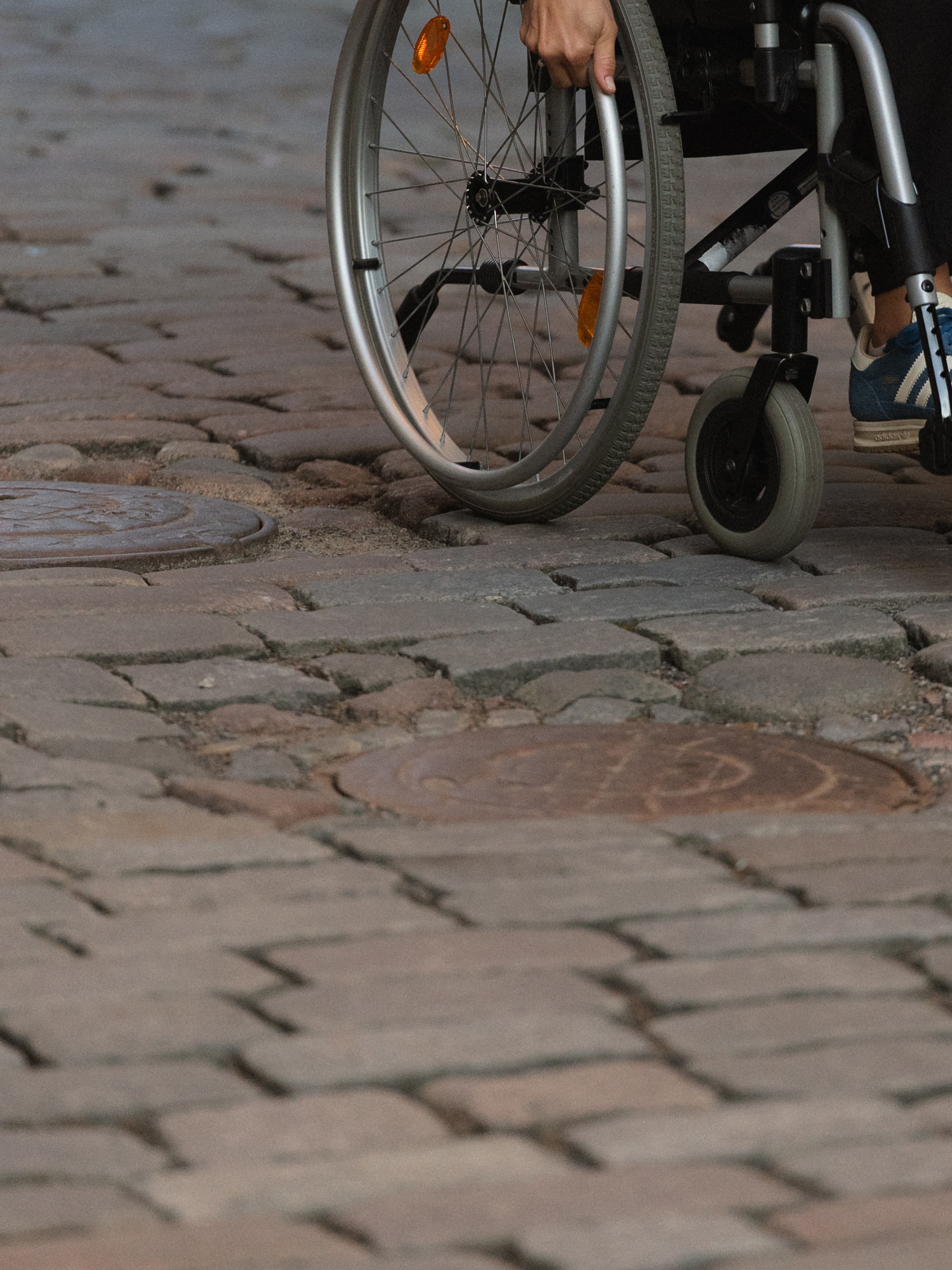
Rough surfaces expose wheelchair users to vibrations causing chronic pain.
Garcia-Mendez et al., 2013
The first issue is the most immediately frustrating. I was recently on my way to an important work event when, two minutes from the venue, my map told me to turn off the main road – by going down an entire flight of stairs. Not only was this, obviously, impossible, but I had no way of telling the app that I couldn’t do what it was suggesting. Instead, I had to guess at an alternative route until the algorithm rerouted me. Almost inevitably, instead of being right on time, I was a good 15 minutes late.
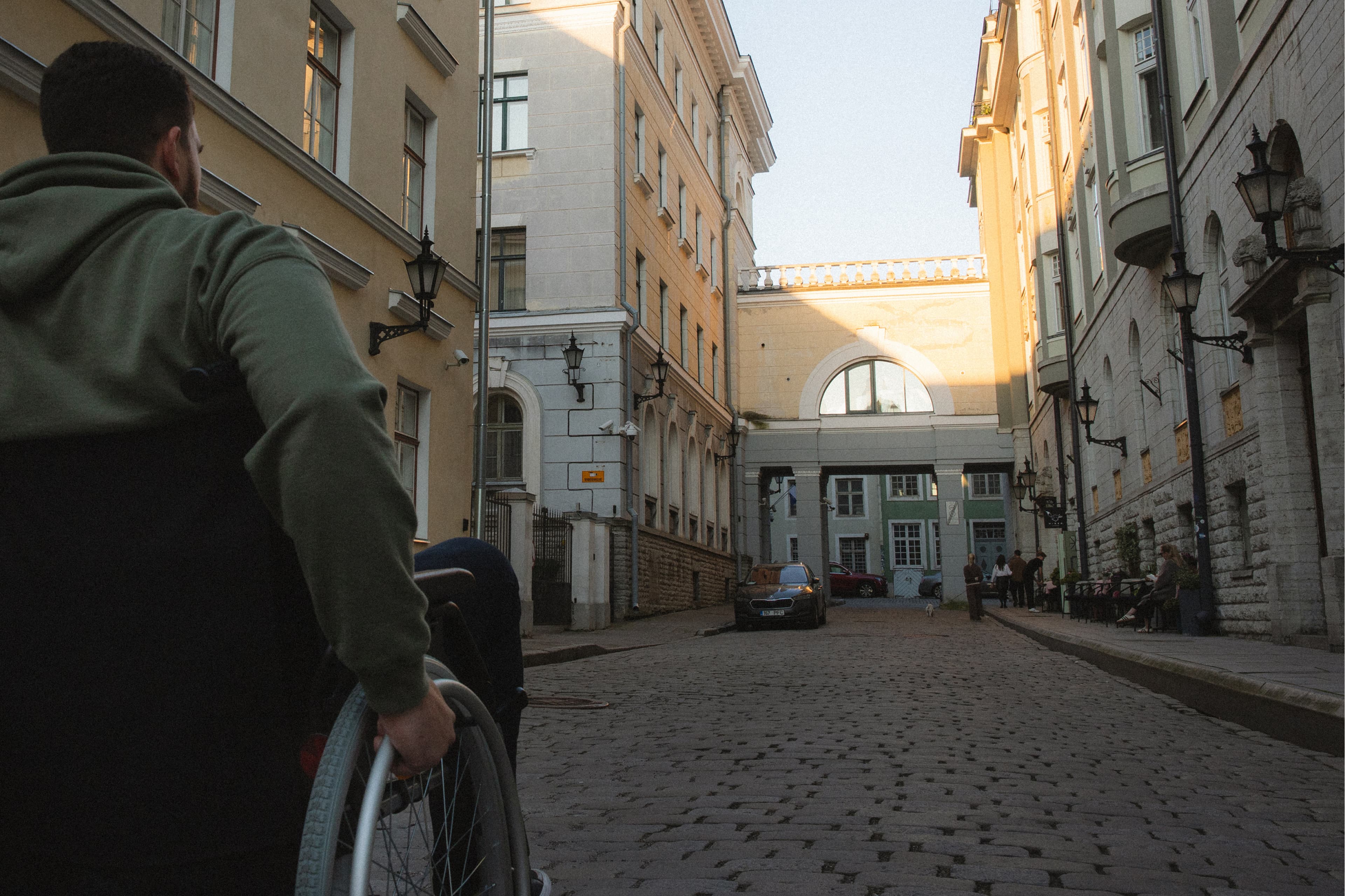
The other issue, when data isn’t so much wrong as missing, is less obvious but more pervasive. An app may successfully provide you with a step-free route, but there is no way of knowing if it includes a hill you can’t get up, terrain you can’t traverse (cobblestones are our collective nemesis), or, most commonly in a European city, a pavement that suddenly ends without a dropped kerb, leaving you peering at the other side of the street with no way to get to it.
Late and Stressed
All of these issues lead to a lot of doubling back and trying again a slightly different way, while your GPS adopts an increasingly insistent tone as it instructs you to turn around. It all leads to wasted time and energy. Both commodities in limited supply for many disabled people. Perhaps most frustratingly, the endless rerouting means that, just as I was for that work event, wheelchair users are often late – leading to even more stress and, sometimes, embarrassment.
The Way Forward
The good news is that knowledge can be created and shared. All the information wheelchair users need can be mapped. Already, apps exist that allow users to manually input access data for restaurants, bars, cafes, museums, theatres, hotels and so much more. But these are self-limiting; they rely on someone knowing about the app, taking the time to log information, and understanding accessibility enough to do it with accuracy. And these apps focus solely on the destination, not the journey, when we know that both are equally important for a wheelchair user’s overall experience. It will make a huge difference when we map the access of journeys too, so that wheelchair users feel confident not just about where they are going, but how they are getting there. Doing so with already-available data, or data we can collect easily, means that this solution can be rolled out easily, improving the lives of wheelchair users now, not in the distant future.
"After all, knowledge is power."
Lucy Webster, 2025
So while we wait for better access across the board, what we can do now is give wheelchair users reliable information. What’s even better is that, by providing access data for wheelchair users, you not only open up the world for them, but for many others too. From parents with buggies to older people with walking frames, from those with chronic fatigue to travelers with luggage, equipping people with this knowledge benefits everyone. And the city becomes a place where everyone is welcome – and, hopefully, on time!